
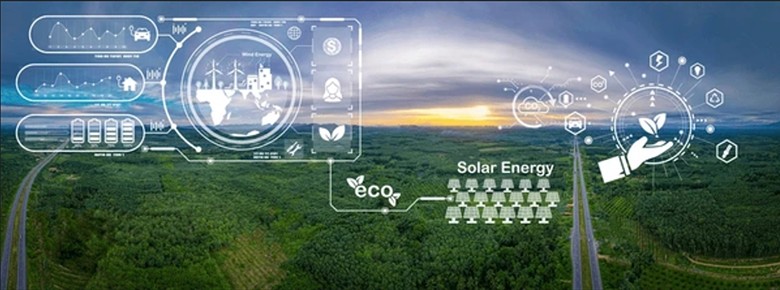
Energy powers everything you do, but not all energy sources are equal.
Despite sun and wind are renewable and abundant , 84% of the U.S.‘s primary energy in 2023 still came from fossil fuels like petroleum, natural gas, and coal.
In this article, you’ll learn about 10 examples of non-renewable resources you depend on every day. We’ll dive into what each one is, how it powers your world, and why it matters their being ireplacable outright.
Let’s start with crude oil, which is still the lifeblood of the modern U.S. economy.
What Are Non-Renewable Resources?
Non-renewable resources are natural resources that nature can’t easily replenish. Once we use them, even when nature does replenish them, they still fail to keep up with global consumption.
The alternative to non-renewable resources is renewable energy, such as solar and wind power.
10 Examples of Non-Renewable Resources
Let’s look at 10 examples made up of fuels, minerals, and elements that you rely on every day!
1. Crude Oil
You may already know that crude oil is still the lifeblood of several industries, including transportation and plastics.
Also known as petroleum, this fossil fuel is a mixture of hydrocarbons that formed from the remains of animals and plants that died millions of years ago. Heat and pressure from the layers of sand, silt, and rock turned the remains into oil.
The U.S., in particular, is a powerhouse when it comes to production, with 2025 domestic production projected at roughly 13.61 million barrels per day and consumption reaching 20.5 million barrels per day.
However, since the U.S. can’t keep up with demand, it’s necessary to import goods. The Energy Information Administration (EIA) even sees domestic output peaking at 14M barrels daily by 2027 before it starts to fade.
2. Coal
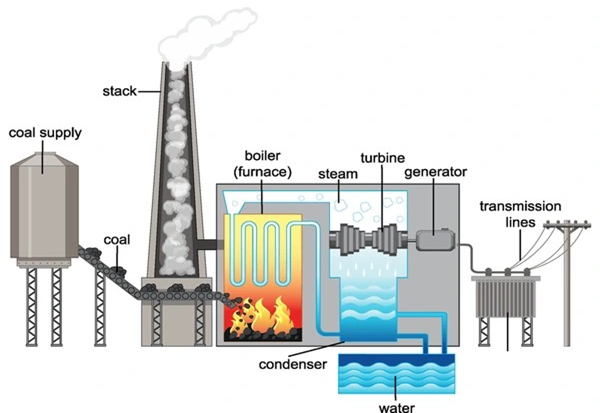
Another fossil fuel, coal, is a combustible black or brownish-black sedimentary rock that forms similarly to crude oil. Heat and pressure transform dead plants, buried under mud and water, into coal in a process called coalification.
While it was once one of the most dominant sources of energy in many parts of the world, it’s declining in popularity. In 2024, coal provided only about 16.1% of U.S. electricity, hitting a historic low, and experts forecast production will fall even further, possibly to 500 million short tons.
This change is thanks to renewable energy’s growing presence. Solar and wind have surpassed coal in power generation for the first time in 2024, offering a cleaner source of energy.
However, coal still powers turbines and heats factories today, but cheaper, cleaner alternatives are cutting into its market share.
3. Peat
While peat is a separate non-renewable resource, you might call it coal’s baby cousin. It represents an earlier stage in the transformation from plant matter to coal, but people use it as a resource in its own right in a few parts of the world.
While technically renewable in the sense that the Earth’s natural processes can replenish peat, it’s non-renewable for humans since it takes millennia to create more.
In the U.S., peat is used for gardening and occasionally as a fuel source, while Ireland and Finland are more likely to use it for energy.
The catch with peat is that it stores huge amounts of carbon, which is released when it is dug up or drained. When you’re burning peat, you’re burning through a climate buffer that took centuries to build.
4. Natural Gas
Natural gas occurs as part of the formation of oil. It’s made up of several different compounds, including methane, carbon dioxide, and water vapor, and is found in the spaces within shale, sandstone, and other types of sedimentary rocks.
Although it’s frequently associated with heating and power, it pops up in other places, such as fertilizer. The EIA estimates that dry gas production will reach 105.2 billion cubic feet per day in 2025, an increase of roughly 1 billion cubic feet since 2024.
However, like other fossil fuels, it’s finite. As it’s become the dominant electricity source, with approximately 40% of the U.S. power being natural gas (coal is approximately 15%), there will be a time when reserves run out.
5. Lithium
If you use any sort of tech, like a smartphone or electric vehicle, lithium is probably powering it in the form of a lithium-ion battery.
Lithium is a soft, silvery metal that is highly reactive, making it a great metal for batteries. Although it’s a finite resource, it’s highly sought after for transitioning to zero-emission energy using rechargeable batteries.
While Americans use a lot of lithium, it’s heavily dependent on imports. The U.S. relies on 45% to 75% of all lithium to come from abroad, from Australia and the lithium triangle made up of Bolivia, Chile, and Argentina.
Lithium is extracted from rock either through hard rock mining in open-pit or underground mines or by pumping out lithium-rich brine from underground reservoirs.
6. Helium
Helium, a colorless, odorless, tasteless, and non-toxic chemical element, isn’t just for birthday balloons; it’s a crucial gas used in MRI machines, semiconductor manufacturing, and aerospace. It’s highly prized because, unlike lithium, it’s non-reactive and can cool things to near absolute zero.
Extracted from natural gas deposits, it must be captured and liquefied before it is released into the atmosphere because it’s so light that it escapes Earth’s gravity and is gone forever.
The U.S. has historically been the world’s top helium supplier, with Qatar and Algeria also taking top spots. Helium reserves in the U.S. are located in Kansas and Texas, but have been shrinking with time.
7. Phosphate
If there’s any entry on this list that you might not be familiar with, it’s phosphate. Phosphate rock doesn’t sound glamorous, but it quietly fuels your life every da,y and without it, global food production would plummet. It’s a key ingredient in fertilizer and animal feed, a backbone of modern agriculture, and an emerging star for electric vehicle batteries.
The U.S. has large deposits in Florida, North Carolina, Idaho, and Utah, but it’s still a finite and non-renewable resource. The U.S. Geological Survey estimates America’s remaining phosphate reserves to be about 1.1 billion metric tons, a small amount considering the global demand agriculture places on it.
The twist for phosphate is that phosphate mining is often strip mining, which violently changes the environment. It also produces phosphogypsum, a radioactive byproduct that creates massive waste piles.
8. Propane
Propane is a flammable gas that can be liquefied and stored in pressure cylinders. It’s used to grill food, for transportation, to heat cabins, and to power rural homes, and is a byproduct of fossil fuels processing and refining.
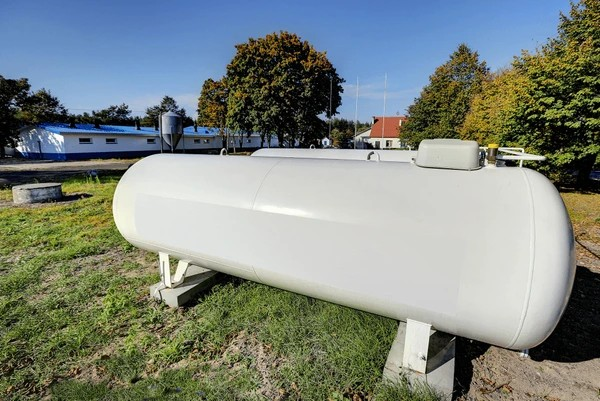
About 90% of U.S. propane is produced domestically through natural gas processing and petroleum refining, but the rest is imported (70% of which comes from Canada). It is highly combustible but has safety advantages over gasoline, as it requires higher concentrations present in the air before it will ignite and requires a higher temperature than gasoline to ignite.
Although propane is non-renewable and a by-product of the fossil fuel industry, there are environmental benefits. It burns cleaner than gasoline or diesel fuel and produces fewer greenhouse gas emissions on a per unit energy basis.
9. Uranium
You may have heard nuclear energy called renewable, and while it uses recycled steam, doesn’t use the same materials as fossil fuels, and it’s clean burning, it still relies on a finite metal: uranium, specifically uranium containing the isotope U-235.
Nuclear energy accounts for almost 20% of U.S. electricity generation, so one-fifth of all power relies on mined uranium, of which 75% comes from Kazakhstan, Canada, Australia, and Namibia.
Although nuclear energy is the primary use for uranium, it’s a very common element in the Earth’s crust. It has also been used for the task of producing medical isotopes and marine propulsion.
10. Earth Metals (e.g., Gold, Copper, Aluminium)
Coming from finite ore deposits, earth metals such as gold, copper, and aluminium are the unsung infrastructure heroes playing important parts in wiring, buildings, and aerospace.
In 2023, U.S. non-fuel mineral production equaled about 45,000 metric tons or $105 billion despite the mining being energy-intensive. As of 2025, the U.S. rare earths supply is exclusively sourced from the Mountain Pass mine in California.
Each metal will have a slightly different production journey. Copper is a by-product of mining more expensive elements like gold, zinc, or nickel.
The U.S. used to be one of the top producers of bauxite, the primary ore for aluminium, with multiple mines across the U.S., such as in Virginia, but now imports much of it from Canada.
The Future of Non-Renewable Resources
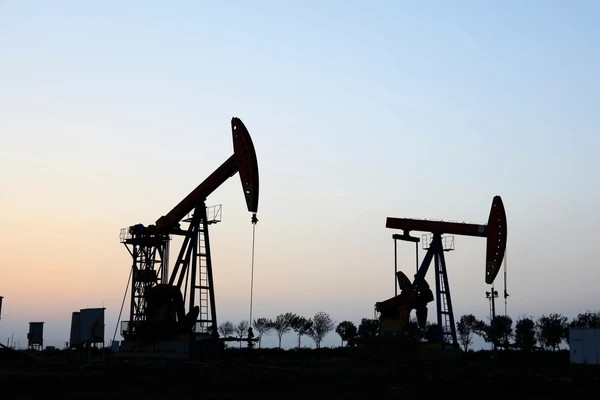
The U.S. still leans heavily on non-renewable resources, but their dominance won’t last forever.
Oil and gas production may hit record highs through the mid-2020s, yet long-term forecasts show output peaking and eventually declining. Coal is already sliding while uranium and critical minerals face supply pressures.
At the same time, innovations like carbon capture, recycling, and energy efficiency improvements are extending the lifespan of existing reserves.
Renewable energy is gaining ground fast, and industries that depend on non-renewables are already adapting to this transition.
Conclusion
From crude oil to earth metals, these ten examples of non-renewable resources show just how much of modern life depends on resources that cannot be replenished.
They help to power your car (whether gas or electric), grow your food, light your home, and run your tech, but every barrel, ton, or cubic foot we use is one step closer to depletion.
Knowing these limits can help you make sense of today’s energy debates and tomorrow’s necessary solutions.
Want to keep exploring how energy shapes your world? Check out this article examining the paradigm of renewable energy vs fossil fuels.